This session invites Mission Soil projects to present their main finding and results, and discuss their contributions to EU soil policies. Five years into the Mission Soil, this session aims to provide an overview of its most important insights and its contributions to soil policies. The session will be part of the EU Soil Observatory Stakeholders Forum of 2026.
09 Sep 2026 09:00 - 12:30(Europe/Lisbon)
Venue : Auditorium I Available Seats : 200
20260909T090020260909T1230Europe/LisbonEUSO Forum - Five Years On: Key Insights from the Mission Soil Program
This session invites Mission Soil projects to present their main finding and results, and discuss their contributions to EU soil policies. Five years into the Mission Soil, this session aims to provide an overview of its most important insights and its contributions to soil policies. The session will be part of the EU Soil Observatory Stakeholders Forum of 2026.
Auditorium ISoils for Europe Conferencecontact@soils4europe.eu
New applications of SHERPA, the first quantitative assessment of soil health at European scale considering soil genesis
09:15 AM - 09:30 AM (Europe/Lisbon) 2026/09/09 08:15:00 UTC - 2026/09/09 08:30:00 UTC
The degradation of soil health poses a significant risk to food security, biodiversity, and climate stability in Europe. Although there has been considerable debate among scientists regarding the definition of soil health over the past decades, a measurable framework for its monitoring, management, and policy has been notably absent. We present SHERPA (Soil Health Evaluation, Rating Protocol, and Assessment) and introduce the first comprehensive soil health assessment across Europe. All principal soil degradation processes, excluding organic contamination, were evaluated and deducted from intrinsic soil health, resulting in quantitative final scores. Consistent with previous reports, SHERPA scores indicate that cropland soils across Europe are severely degraded. Surprisingly, the health of grassland soils is also adversely affected. Factors such as soil erosion, nutrient surplus, and pesticide risk significantly contribute to poor soil health, which correlates with the reported high loss of biodiversity in agricultural areas. Additionally, forest soils exhibit unexpectedly low health levels, primarily due to nitrogen surplus, reflecting the documented widespread decline of forests caused by nutrient imbalances. SHERPA effectively quantifies soil health across the continent. However, given current data availability, soil health is likely still overestimated. There is an urgent need for monitoring data on soil structure, compaction, pesticide distribution, and, in forest ecosystems, disturbance of the humus layer to achieve a conclusive assessment. The presentation will showcase the latest developments in SHERPA, including utilizing the complete ICP Forest data set and an application to measured point data from the Olive Orchards of the SOIL O-Live project.
Open Spectral Libraries and Explainable AI for Soil Health Monitoring
09:30 AM - 09:45 AM (Europe/Lisbon) 2026/09/09 08:30:00 UTC - 2026/09/09 08:45:00 UTC
Soil health underpins sustainable agriculture, food security, and climate change mitigation, with soil organic carbon (SOC) standing as one of its most critical indicators. Traditional wet-chemical analyses remain costly, slow, and poorly suited to large-scale monitoring. Open soil spectral libraries (SSLs), including the European LUCAS database, have fundamentally changed this landscape. By harmonising thousands of georeferenced soil spectra across the visible, near-infrared, and mid-infrared regions of the electromagnetic spectrum with conventionally measured soil properties, these open resources provide large, diverse reference datasets necessary for building robust, transferable prediction models for local to global scales. Recent advances in deep learning, particularly one-dimensional convolutional neural networks (1DCNN) coupled with stacked autoencoder (SAE) feature extraction, have demonstrated state-of-the-art performance for SOC prediction from these high-dimensional spectral datasets, substantially surpassing conventional approaches. However, the opacity of deep learning architectures limits practitioners' confidence and broader adoption in operational soil-monitoring workflows. Explainable artificial intelligence (XAI) offers a direct route to address this interpretability challenge. Frameworks such as HPExplorer enable interactive exploration of hyperparameter configurations, identification of performance-consistent model subspaces, and transparent assessment of how spectral inputs drive model predictions. By openly integrating available SSL resources, deep spectral feature modelling, and interactive XAI tools, this work outlines a scalable and interpretable framework for soil health monitoring that bridges predictive power with the transparency required for evidence-based decision-making in precision agriculture and environmental policy.
Soil health assessment in a life cycle perspective: Developing Soil Pollution Potentials for As, Cd, Cu, Hg, and Zn
10:00 AM - 10:15 AM (Europe/Lisbon) 2026/09/09 09:00:00 UTC - 2026/09/09 09:15:00 UTC
Managing healthy soils requires the ability to quantify the performance of products and technologies with respect to soil health impacts, and to express the resulting scores relative to the carrying capacities of soils to maintain a healthy state. To enable this, we develop a new metric, the Soil Pollution Potential (SPP), which translates anthropogenic emissions of metals into excess concentrations of Cu, Hg, Zn, Cd, and As in soils. The SPP is consistent with the soil pollution indicators and thresholds of the EU Soil Observatory's (EUSO) Soil Health Dashboard, and is modeled using recommended approaches for characterization modeling in life cycle impact assessment to account for multimedia transfer and environmental fate processes that metals undergo. We apply it to national inputs of metals to soils from livestock manure to demonstrate its applicability for life cycle assessment (LCA) and absolute environmental sustainability assessment (AESA).
Presenters Mikolaj Owsianiak Associate Professor, Technical University Of Denmark Co-Authors
Developing SoilHealth Business Models: Learnings from the DeliSoil-Waste4Soil Joint Workshop
10:15 AM - 10:30 AM (Europe/Lisbon) 2026/09/09 09:15:00 UTC - 2026/09/09 09:30:00 UTC
This abstract reports learnings from the joint DeliSoil–Waste4Soil business model workshop, organised as an online co-creation session around circular bioeconomy Living Labs, case studies, value propositions, business intelligence, social acceptance, economic performance, regulatory compliance, and shared Mission Soil terminology. The workshop concept followed PREPSOIL guidance, which frames business models for Soil Living Labs and Lighthouses as strategic tools for creating, delivering and capturing value, securing investments, and strengthening long-term sustainability in alignment with Mission Soil objectives. [prepsoil.eu], [zenodo.org] The discussion connected two Horizon Europe projects under Mission "A Soil Deal for Europe", which seeks 100 Living Labs and Lighthouses by 2030. Waste4Soil develops recycling pathways, 10 technological and methodological solutions, seven Living Labs, and an evaluation framework to valorise food-processing residues into local soil improvers; its WP6 assesses circular bioeconomic business models to support sustainability of project results. [waste4soil.eu] DeliSoil aims to bring safe, regulated recycled fertiliser products to market, identify financial and other barriers, and create new value chains for food-industry side-streams through viable business models. [delisoil.eu] In Waste4Soil, business modelling is structured as a participative process: context definition, idea generation, analytical selection and business-model design supported by multi-criteria decision support for circular market uptake decisions.
Iida Sallinen Savonia University Of Applied Sciences
Soil Health Monitoring and Prototype Evaluation: A Living Lab-Based Approach
10:30 AM - 10:45 AM (Europe/Lisbon) 2026/09/09 09:30:00 UTC - 2026/09/09 09:45:00 UTC
Through a systemic approach, the EU-projects iCOSHELLs and URSOILL develop, test, and validate prototypes to improve soil health by establishing multiple Soil Health Living Labs (LLs) across diverse EU edaphoclimatic and urban zones. Therefore, there is a need to evaluate the most promising prototypes while monitoring their impact on soil health in agricultural and urban contexts. The first step involved an extensive review of soil indicators, relevant policies, and related European projects, showing that no universal set is suitable for all contexts. Based on the review, a practical soil-sampling strategy was designed to guarantee representative and comparable soil samples across all LLs. Moreover, a set of general soil health indicators and assessment methods was proposed (covering key physical, chemical, and biological soil properties), common to all LLs, designed to be reliable, sensitive, informative, and robust. In parallel, each LL proposed specific indicators tailored to directly assess prototype performance in relation to the particular soil challenge addressed. This strategy allows for both a broad evaluation of soil health evolution across all LLs and a targeted assessment of prototype efficacy for soil-specific challenges. To ensure consistency, sampling, laboratory methodologies, and data collection are based on common standard operating procedures and supported through a Round Robin Test. The collected data are evaluated and statistically analysed, while the indicators are interpreted in terms of soil health within each LL context. All these components were jointly developed with the LLs and will contribute to developing models for predicting the performance of soil prototypes.
The Language of Soil: Learning the Lessons from Climate Change
10:45 AM - 11:00 AM (Europe/Lisbon) 2026/09/09 09:45:00 UTC - 2026/09/09 10:00:00 UTC
In this presentation, I draw on the opinion piece by Trdlicova and Neilson (2025), "The Language of Soil: Learning the Lessons from Climate Change," published in the European Journal of Soil Science as part of the ECHO project. In it, we take the stance that both soil health and climate change can be characterised as so‑called "wicked problems". In other words, problems that cannot be solved and must be continuously addressed and re‑addressed. We use this shared characteristic as a justification for applying communication lessons from the latter to the former. We suggest an "appropriate" "language of soil" that should be deployed to effectively communicate the pertinent issues of soil health. Using six recognised examples of climate‑change communication pitfalls, we illustrate why inciting a sense of dread around soil, much like climate "doomism" is not effective. Furthermore, we argue that setting "soil health" deadlines, much like climate deadlines, does not lead to positive action. We then discuss the value-action gap and the way in which it applies to soil communication, whilst also emphasising the importance of avoiding the trap of the knowledge‑deficit model. Finally, we stress the importance of communicating actions rather than simply knowledge, as well as the importance of using "credible" soil‑health communicators.
Advances in Soil Microplastic Measurement: Successes and Lessons from Three EU Projects
11:30 AM - 11:45 AM (Europe/Lisbon) 2026/09/09 10:30:00 UTC - 2026/09/09 10:45:00 UTC
Microplastic contamination in soils is highly heterogeneous and diverse, so that no single analytical technique can fully characterize it without trade-offs. This presentation synthesizes five years of results and experience from three European Union-funded research projects focused on the sampling, extraction, and µFTIR imaging-based characterization of microplastics in diverse soil matrices. Across these projects, multiple analytical approaches were evaluated, including density separation, organic matter oxidation, and spectroscopic identification models. Their performance is compared in terms of variability, recovery rates, size detection limits, polymer identification accuracy, and suitability for different soil types. Particular attention is given to key methodological challenges such as organic matter interference and contamination control. Based on these findings, we recommend tailored methodological approaches aligned with specific research and monitoring objectives. We highlight best practices and provide recommendations for future research and policy development. By integrating insights from multiple projects, this work contributes to the advancement of harmonized methodologies and supports the development of regulatory frameworks for soil microplastic assessment in Europe.
The impact of anthropogenic activities on soil microbial functioning measured through different land-use types and management intensities across Europe
11:45 AM - 12:00 Noon (Europe/Lisbon) 2026/09/09 10:45:00 UTC - 2026/09/09 11:00:00 UTC
Soil microbial communities are essential for many ecosystem functions such as nutrient cycling, climate regulation and degradation of contaminants. However, soil health is threatened by anthropogenic activity which can have subsequent negative impacts on these ecosystem functions. To better understand how microbial nutrient cycling is affected by a range of land-uses, we investigated several land-use types and management intensities across soil types and climate regions. Soil samples were collected in the following countries: Belgium, Switzerland, Germany, Ireland, Italy, Israel, the Netherlands, Romania, Spain, Slovakia and Sweden across different land-uses (forest, grassland, arable, urban, wetland, orchard) and management intensities for land-use, namely forest (conserved, managed, clear-cut), grassland (conserved, extensive, intensive) and arable (organic, no tillage, conventional). We investigate how land-use affects the soil microbiome by analyzing the soil physicochemical properties (soil texture, moisture, pH, C and N) and nutrient cycling genes such as mcrA (encoding methyl-coenzyme M reductase), pmoA (encoding methane monooxygenase) and phosphatase phoD with qPCR. The results of this study will give us a better understanding of soil health by unraveling the interactions of the soil and its nutrient cycling capacities. Moreover, this information will give a clear indication of how ecosystem functions are impacted by anthropogenic activity across a wide range of climatic conditions.
Presenters Sarah Van Den Broek Postdoctoral Researcher, Swiss Federal Institute For Forest, Snow And Landscape Research WSL Co-Authors
Aline Frossard Senior Researcher, Swiss Federal Institute For Forest, Snow And Landscape Research WSL
Integrating Pesticide Impacts into Soil Health Frameworks: Lessons for Horizon Europe Soil Initiatives
12:00 Noon - 12:15 PM (Europe/Lisbon) 2026/09/09 11:00:00 UTC - 2026/09/09 11:15:00 UTC
Pesticides are widely distributed in European soils, yet their implications for soil biodiversity and functioning remain insufficiently integrated into soil health frameworks. Building on a large-scale assessment across 373 sites spanning croplands, grasslands and woodlands in 26 European countries, we quantified the effects of 63 pesticide residues on multiple soil biota-including microorganisms and invertebrates, associated key functional guilds (e.g. arbuscular mycorrhizal fungi (AMF), protist plant parasites) as well as functional gene groups involved in carbon, nitrogen and phosphorus cycling. Pesticides were detected in 70% of sites and emerged as a major driver of soil biodiversity, following soil properties. Our findings reveal complex organism- and function-specific responses, including the decline of beneficial groups such as AMF and bacterivore nematodes, alongside alterations in key nutrient cycling processes (e.g. nitrogen and phosphorus). These results underscore the importance of considering both taxonomic and functional dimensions of soil biodiversity when assessing chemical pressures. For EU Horizon projects under the Soils for Europe mission, these insights highlight three priorities: (i) integrating pesticide residues as core drivers of soil communities and functions for soil health monitoring, (ii) incorporating multi-trophic and functional diversity metrics into biodiversity and pesticide assessment frameworks, and (iii) developing management and policy solutions that address cumulative and non-target effects of agrochemicals, including spillover effects in nearby non-cropland areas. Embedding these elements will strengthen the capacity of Horizon projects to safeguard soil biodiversity and ecosystem functioning across European landscapes.
Arwyn Jones EU Soil Observatory, European Commission Joint Research Centre
Developing a comprehensive assessment of land sensitivity to degradation and desertification in Europe using a refined MEDALUS framework
12:15 PM - 12:30 PM (Europe/Lisbon) 2026/09/09 11:15:00 UTC - 2026/09/09 11:30:00 UTC
Land degradation and desertification represent major environmental pressures affecting extensive areas worldwide, including significant parts of Europe. Assessing these processes requires integrated methodologies capable of capturing the complex interactions among multiple environmental drivers of degradation. This work develops a comprehensive assessment of land sensitivity to degradation and desertification at the European level by applying a refined MEDALUS (Mediterranean Desertification and Land Use) framework at the continental scale. The analysis integrates 24 environmental variables derived from diverse geospatial datasets covering 40 European countries and combines seven environmental quality indicators into a comprehensive Land Degradation and Desertification Sensitivity Index. The refined MEDALUS framework extends the original methodological scheme through the incorporation of multiple additional environmental parameters and supplementary quality indices, allowing an enhanced representation of Europe’s heterogeneous environmental conditions that directly or indirectly influence land degradation and desertification. The results reveal complex spatial patterns of land sensitivity to degradation and desertification across the continent, highlighting areas with poor ecological conditions and high potential for these processes, with notable sensitivity hotspots particularly identified in Mediterranean regions. The obtained geospatial information provides valuable insights into the spatial distribution of environmental susceptibility to degradative conditions and supports the development of sustainable land management strategies and policy measures aimed at mitigating land degradation and desertification across Europe.
By using this website you allow us to use cookies only essencial cookies for maintnance and improvement of the website. They never personally identify you.

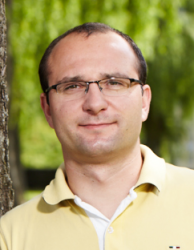 Mikolaj Owsianiak
 Tuomo Eskelinen
 Cristiano Pisani
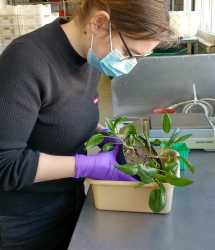 Sarah Van Den Broek